Thursday, October 22, 2015

Writing: The Curse of Exposition

Infodumps are atrocious. An Infodump is defined by TV Tropes as “a type of Exposition that is particularly long or wordy. Although it can be done in a way that is un-intrusive or entertaining, most are obvious, intrusive, patronizing, and sometimes downright boring,” and god almighty, I don’t think there’s a better explanation out there. While exposition is absolutely necessary to figure out what the hell’s going on in a story, why certain things are the way they are, it’s often used badly, leading to long bouts of expositing ideas and scenarios that make you suffer. If you ever hear the words “As you know” or, “you may remember”, skip ahead or just turn off whatever you were watching or playing. That’s just lazy writing. But since exposition is a necessary evil, you have to wonder: “how do I do it right”?

Well, you can’t opt out of it; a good story needs to have some exposition (which is an account of events or goings-on in a story); while it isn’t a pre-requisite, there hasn’t been a decent or coherent story without one. If you have a simple story and a simple world built around it, then a good old “Once Upon A Time” scenario works. Beauty and the Beast (the Disney one) is a film that does this pretty perfectly. It uses beautiful visual cues involving a castle’s stained-glass windows, uses clear-cut, straightforward words to describe the backstory of the castle, and it doesn’t overstay its welcome; this narration segues perfectly into the introduction scene of heroine Belle, which is built around a huge musical number that gives an entertaining insight into Belle’s character, how her character is perceived, and the village in which she lives. So far, we have two forms of exposition that work perfectly; the “Once Upon A Time” introduction, and exposition through music that is both fun to listen to and narratively insightful, providing a wealth of information about the characters and setting in about five minutes. It keeps the action going, and it’s just brilliant direction.


Indeed, the lack of action and movement is the reason an Infodump can suck so much; it’s boring! There is a scene from a contemptible show called Sword Art Online that vomits forth information for a solid eleven minutes. While that in itself is a sin, the scene is further dragged down by the unbelievably boring visuals. It’s literally just two men sitting down in a restaurant and talking, with occasional shots of their cake or a laptop. Sound boring on paper? It’s even worse on screen. It’s just eleven minutes of pouring forth information nobody’s going to remember perfectly without re-watching the scene a second time, which means slogging through another eleven minutes of that shit, and maybe even more.

A lack of intriguing visuals, character interaction, or anything actually interesting happening on screen.Great mix.

 Even well-written shows, games, and films can fall into trappings like this. Phantasy Star 2 slams you with an unprompted explanation, beginning with “As you already know, Algo has been brought up by Mother Brain. My work as a Commander has been to smoothly promote the plans of Mother Brain…” Stop right there. If my player character already knows this, why the hell does it need to be recited back to him/her? Hell, you might as well of had the Commander say: “I wasn't explaining it to you, I was explaining it to them,” pointing at the audience on that last word.

To steal from Lifetips: “Exposition should be doled out on a "need to know" basis. Give the reader only as much as he needs to know right now in order to understand the story.” That’s Show Don’t Tell 101. Neon Genesis Evangelion is a show that used exposition perfectly; it gave us hints, just subtle hints, brief snippets of information to tell us just what’s going on, simultaneously providing answers and bringing up more questions that would come to be addressed in the final episodes and follow-up film. All of those hints and clues come together to form something that is, for the most part, a fully-realized world; when it wasn’t using narrative cues to tell us about the story, it used visual cues and sharp direction. Books can do the same thing by implying a conversation rather than showing the entirety of it, which would speed up the story and (hopefully) keep it from being too long or redundant. Dialogue is always important, but too much dialogue is gratuitous.


 “My dear young man, don't take it too hard. Your work is ingenious; it's quality work! And there are simply too many notes, that's all. Just cut a few and it will be perfect.”
-                             -             Emperor Joseph II, Amadeus (1984)


But if you absolutely have to exposit information directly, keep it short and simple. Have it be about a topic that addresses a particular concern about the world and characters, but not all of the concerns.  From Skies of Arcadia:

               Fina: Um... excuse me, but I have a question. What exactly is an Air... Air Pirate?
               Aika: What? You were out sailing all by yourself and you don't know what Air Pirates are?
               Fina: Oh... I... I'm sorry... it's my first time travelling.
               Vyse: Basically, Air Pirates are sailors that attack other ships and steal their cargo.
               Fina: Attack?!
               Aika: You don't have to worry about us. We're "Blue Rogues." See, Air Pirates are divided into two factions: The Blue Rogues and the Black Pirates. The Black Pirates will attack anything in the sky... especially merchant vessels and unarmed ships. However, we Blue Rogues only take cargo from armed ships, especially the Imperial Armada.
               Vyse: We rob from the rich and keep the gold. But we use the gold to save people that need our help. That's why we helped you. Don't worry, we aren't trying to kidnap you or anything. Just relax and enjoy the trip.


See? Short, sweet, insightful. It could have gone on for much longer, like explaining exactly what the “Imperial Armada” is and who’s in it, how the rivalry and divide between the Rouges and Pirates occurred, but none of that was necessary to the question Fina posed, so none of it showed up.

So there you have it. The creed of exposition is: “Show, Don’t Tell, but if you have to tell, keep it brief and relevant.” Don’t just vomit forth information; it’s like ripping a band-aid off. Leave small pieces of exposition or information-exchanging here and there so that it all adds up by the end of the story. A scavenger hunt would be no fun if all the treasure was just hidden in one place, and the same can apply to storytelling.


That’s about all. 'Til next time.

Friday, October 16, 2015

Why Skies of Arcadia Is Almost Perfect


Skies of Arcadia (Dreamcast, Gamecube) is my favorite role-playing game of all time, and possibly my very favorite game of all time; at the very least, it’s in my top five for sure. It’s often compared to games such as Final Fantasy 7, Tales of Symphonia, Grandia 2, and Evolution 2: Far Off Province; Skies of Arcadia seems to have the best critical reception of any of these series, holding a near-perfect 93 on Metacritic. It was a critical powerhouse but a commercial failure, due to the Dreamcast’s lack of lasting success and the Gamecube version’s poorly-handled release. The critical success of the game implies that there’s something about it that separates it from the others; that “something” is the game’s optimistic charm.


By all means, Skies of Arcadia should not work as well as it does. The entire story is a mashup of many standard fantasy and video game clichés, and I began getting the feeling that I’ve heard and seen a lot of what happened in the story before in other forms of media. I mean, hell:
·        A ragtag band of young heroes searching for magical artifacts to save the world.
·        Over-the-top, evil villains trying to collect the artifacts as well to rule the world.
·        Said magical artifacts are conveniently located in environments that fit their color / properties.
·        Monsters and various creatures give the heroes trouble over the course of their journey.
·        Technologically-advanced, powerful evil empire.
·        Nice morals about the power of love and acceptance of others.
·        A high emphasis on adventure and exploration to distant lands.
·        Magic and weapons work side-by-side in combat.
·        Turn-based combat system.
·        PIRATES.

Sound familiar to a billion other things you’ve seen before? You aren’t alone. But what really makes Skies of Arcadia special is how it utilizes every single one of these tropes in a way that is incredibly refreshing and uplifting. The surprising success of the gloomy, angsty Final Fantasy 7 on the Playstation had led to a large fleet of copycats trying to imitate what Final Fantasy 7 did in the hopes of achieving the same amount of success; such examples are Planescape: Torment, Panzer Dragoon Saga, Xenogears. Skies of Arcadia ranks pretty low on the “dark and edgy” scale; it is one of the brightest, most optimistic things I’ve ever seen, and it comes off as more of a reconstruction of the classic RPG formula rather than a brooding deconstruction. Yes, it’s cheesy, and hammy, and clichéd, but the game itself is far more than the sum of its parts.


And that’s not even to say Skies of Arcadia is devoid of original or decent writing; it’s superbly-written. The way that it builds up its world is absolutely genius. Although the story itself is intentionally linear and unchangeable, there is quite a lot to do within that linear timeframe because of the emphasis on adventure and exploration. It’s a world set in the sky, and the possibilities for that are never-ending. It boasts one of the most completely realized worlds I’ve seen in anything, video gaming or otherwise, and it gets you emotionally and aesthetically involved in the storyline. Furthering this appeal is the game’s cast of discrete yet personable characters; there’s someone you’re bound to like in this game, be it the bright-faced, adventurous Vyse, the spunky Aika, the timid and mysterious Fina, the ambitious, soulful Enrique, or the inside-and-out tough Drachma and the playful flirt Gilder. They give Arcadia the strong human spine it needs for its enormous action and circumstances to be emotionally involving on top of being technically impressive.


The combat system is also really great, speaking of technicality. It’s not that the combat is particularly deep, tactical, or hard to master; it’s actually really straightforward, turn-based combat. But it’s the simple fact that the combat just feels exhilarating. The big boss battles in Skies of Arcadia have a huge sense of grandeur, and you want to win the battles, not just push through them in the hopes that you can level up; you want to succeed. There’s a fair amount of strategy and organization put into the combat mechanics - hardly the stuff of intense analysis and complexity but impressively nuanced and thoughtful. On the harder battles, you really have to think about your moves, and whenever they work in your favor, it feels incredibly satisfying. The attacks have serious weight to them, with a lot of pretty visuals, impactful sound effects, and fast movement. It’s incredibly shallow entertainment, action with no purpose other than looking really cool, but it’s incredibly effective entertainment, too.


It’s for these reasons that I can pour so much time and energy into Skies of Arcadia. I’m willing to overlook the few flaws it has – the ridiculously random encounter rate, occasionally contrived plot points, hiccups in visuals or animations – because they’re irrelevant when you have something as fucking awesome as Skies of Arcadia. It’s the feel of the game that makes it work; not the technicality, or the detail, or even the look of the game, but the way that the story, characters, gameplay, and aesthetics make me feel. Out of the countless JRPGs produced in the late 90’s – mid 2000’s, there are only a few genuine works of art, and Arcadia’s one of them.


Wednesday, October 14, 2015

Smosh: The Movie

My Twitter: www.twitter.com/dreamstar0

The poster is honestly the worst part about the movie. I have no idea what it signifies other than pure horror.

Smosh: The Movie happens to be my very first encounter with Smosh and anything related to the Smosh lore, or whatever. I know nothing about them beyond the fact that they’re a really popular comedic YouTube channel (at one point the most subscribed channel on the site, which is really saying something) and Red vs. Blue made a reference to them, like, once. I was told, however, I wasn’t going to like it, that it would be awful. So, naturally, I checked it out as quickly as possible, and luckily Netflix had it. I walked in with absolutely no bias towards Smosh, and this movie would either make or break my opinion towards Anthony Padilla and Ian Hecox, creators of some of the most popular videos on YouTube I’ve actually never gotten around to watching. I’m comparing it to nothing at all. I cannot say if the quality of the movie matches the videos. It could be unambiguously worse than anything else involving the broish comedic duo, or it could unambiguously better.

It was actually pretty okay.


This isn’t the first time a YouTube channel has made its way onto the big screen. I think that honor might have to go to Fred: The Movie (and its apparent many sequels), an invisibly mediocre film that was nevertheless a much better candidate to be made into a movie than Smosh. Fred’s multiple videos have (or had, I haven’t watched the channel in years, not that it was ever the stuff of hefty analysis) a vague sense of consistency between them that could have been easily fitted into the normal beats of an American kid-focused film. There was Fred, his mother, the girl he liked, the stereotypical bully, the faraway dad, blah blah blah. Fred was born to be made into a crappy film, which it was. Smosh isn’t; their shtick is skit comedy and one-shot comedy videos, with no genuine sense of continuity. That kind of material is considerably harder to adapt into a coherent, consistent film.

Also, Steve Austin as himself. Give me a hell yeah.

But they try to do that anyway, with occasional success and occasional failure. The plot follows as such: Anthony Padilla and Ian Hecox (starring as themselves) are two slackers who live with Ian’s classically white, bland parents. The only one trying to get his life back in order is Anthony, who has a gig as a pizza delivery boy. Ian just lounges around and obsesses over videos of a girl getting her butt massaged, whom he affectionately calls Butt Massage Girl (get used to hearing that). They dick around for about ten minutes before the actual story happens; their 5-year high school reunion is approaching, and Anthony sees this as a chance to finally confess his love for Anna Reid, an activist for people who suffer from Ring Finger Largeasia, a disease that apparently kills people whose ring finger is larger than their index finger (I happen to suffer from this). But, alas, there is an embarrassing YouTube video of Ian on the reunion page, so embarrassing it undergoes a meteoric rise in popularity in the span of a few hours (realistically enough, surprisingly; it gets about 700+ views total by the time the movie ends).

Ian wants the video taken down in the hopes that Anna never sees the video; they hop off to the headquarters of YouTube, where they meet the profoundly weird, idiosyncratic Steve YouTube, who tells them that although a video cannot be deleted, it can be altered to have a more favorable outcome, via a cyberspace portal located in his closet. Ian and Anthony hop through the portal and enter into the world of YouTube itself, and it’s around this point the film gets really terrific.


Well, alright, not “really terrific”. This isn’t a comic masterpiece; in fact, the biggest problem with the writing is how often it veers from inspired to stupid and back again in the blink of an eye. It is, at once, surrealistic, and very generic and simple; impossible to look away from, yet impossible to take seriously. But if there’s one thing the film definitely has going for it, it’s that the parts involving Ian and Anthony’s journey through YouTube are by far and away the best parts in the film. It’s a finer line than you think; it manages to rip apart and deconstruct everything that’s stupid and odd about YouTube (they travel through bad music videos, horrendous advertisements, vlogs, and even videogame play-throughs, and these are just the ones I can think about off the top of my head), yet it’s done with a lot of love. The film never does shake the feeling that its natural home is on YouTube, but that gives it a certain amount of charm and finesse.


But therein lies the problem. The film never does shake the feeling that its natural home is on YouTube, and it shows. It’s anything-goes kind of writing is perfectly suited to an eleven-minute skit on Adult Swim I would totally watch, or even a half-hour short film, but not an eighty-minute movie with a storyline, character arcs, and big-screen visuals. The “Real World” parts of the movie are hokey and kind of slow, especially in comparison to the wicked pacing of the “YouTube World” parts. The protagonists, two idiots who mean well, are somewhat enjoyable and easy to root for, but they’re given an incredibly generic “person learns to just be himself” character arc that, while nice and a good moral, is one of the dominant themes of, like, everything. The one-note personalities of the other characters make them feel more like plot devices rather than characters; the only ones I could ever get behind were Steve YouTube, who was funny when he wasn’t used for dick jokes, and Diri, a tongue-in-cheek ripoff of Siri that even the characters note is no different from the actual product. The cinematography is… okay. Just, okay. It gets by. And there are a few points when it becomes more endurance test than film, seeing how long we can withstand the nonstop stupidity, the dick jokes, the occasionally grotesque violence, and utter chaos. Even the rock-inspired soundtrack doesn’t have much going for it; I’m struggling to remember what the opening theme was.

This isn’t to say the film wasn’t enjoyable. The film is creative, and occasionally delightful; the various cameos of people like YouTube stars Markiplier, Steve Austin, and Jenna Marbles work in the film’s favor, and it winds up being more of a love letter to YouTube than a piss-take of YouTube; it never mocks it audience nor panders towards it. But the film is also very “normal” and generic, with its “be yourself” theme and tendency to use lowbrow / nerd humor as cheap jokes. Couple that in with all-over-the-place pacing (it is at once too fast and too slow) and you get a film that ultimately lacks the necessary impact it was going for.


6/10

Saturday, September 26, 2015

So, Teen Titans Go?


Check out my Ask.fm account: http://www.ask.fm/dreamstaro
And my Twitter feed: http://www.twitter.com/dreamstar0

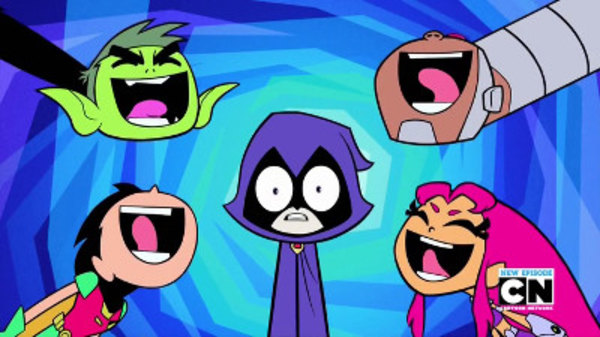
Teen Titans Go probably isn't as bad as you've heard. But, since you've heard that Teen Titans Go is capable of causing aneurysms and murdering puppies, that's a weak defense. In its favor, it has pretty solid animation - it's very fluid, looks natural, and the style reminds me of a mix between WordGirl and Star vs. The Forces of Evil. It fits with the kid-friendly nature of the show. I also like the poppy color scheme - lots of blues, greens, pinks, warm colors like that.

Alright, that's about all I got. In truth, I'm probably giving Teen Titans Go more credit than it actually deserves. I never said this show was very good. A lot of people hate this fucking show with a passion; I merely dislike it, and I think it's another one of those disposable, invisibly mediocre cartoons that networks like Nickelodeon seem to be indulging in. But I figure that, if you want to look at film and cinema on a large scale, you have to break apart or analyze the criticisms and community surrounding a film or a television show, and that's exactly what I'm going to do. The purpose of this is to examine why people despise this show so much, and I think I have an idea why.


For starters, it's stupid. Like, really stupid. The thing about Teen Titans is that it was a brilliantly-written drama that was still very kid-friendly and appealing in spite of its darker elements. It appealed to a broad audience of kids and adults like. It's also one of those few shows that stood the test of time; I was re-watching some episodes the other day and I can still appreciate the amount of effort that went into them; I'd wager it was even better than I remember. So, given these circumstances, creating a spinoff of a dearly-beloved show was risky from the get-go; turning it into a comedic was even riskier. The original Teen Titans was funny enough; in fact, the constant drama and action helped give weight to the moments of levity and comedy.


It was comic relief in an otherwise serious, heartfelt show. To turn it into a full-stop comedy and put the humor front and center would not only remove the dramatic tension but trivialize the circumstances and characters. And the characters are indeed trivialized; in fact, the minimal character development is by far and away he worst aspect of the show. They aren't characters anymore, they're stereotypes, and stereotypes can't be used as effective characters. The Titans have a lot of their negative traits exaggerated for comedic purposes; and they are, intermittently, comedic. They are also, far more than intermittently, not comedic. The characters' flat personalities (the sassy black guy, the shrill young leader, the annoying green guy, the ditzy redhead, the emotionless chick), and the low number of gags that can be taken out of those personalities, makes the whole premise seem incredibly trivial.


The show fails on a narrative perspective, too. It's bad enough to have unsympathetic characters (though that's not a pre-requisite, there hasn't been a good kid's show without somewhat likable heroes), but to have a go-nowhere plot is arguably worse. The original Teen Titans was made up of a collection of shorts and isolated stories, but it had reoccurring plot elements and villains that gave it momentum. Kind of like what Cowboy Bebop did. Teen Titans Go doesn't have that sense of momentum; it doubles down on being spontaneous and random at the expense of being consistent. There's a lack of bite in its conflicts, characters, and even morals. In fact, having morals in the story to begin with is contradictory; because the characters are specifically designed to be inflexible, having them learn a moral or message by the end of each episode is pointless and counter-intuitive.

It's manic as all hell, which isn't really the problem; it's the constant chaos that makes it exhausting. Each individual scene is exactly the same as the one before it, and it becomes tedious by the end of everything. It's not insufferable; the Young Justice crossover episode was actually funny because of how absolutely deranged it was; it was mocking itself. But, as a whole, it is tiring, more than it should be.


In spite of that, I believe the reason people hate this thing so much is because of how uncaring the show as a whole is towards its fans and viewers. There is a particularly infamous episode, "The Return of Slade", that pretty much affirms this. I'm not going to go into depth about what happens in the episode, but the entire episode basically makes a claim that animation and cartoons are just for kids, and anybody who criticizes this show just needs to accept that they're taking it too seriously. It's an attack on the critics, which is never a good idea. It's callous and petty, and also retroactively ironic because Teen Titans proved that animation can be more than just children's entertainment.


And, at the end of the day, that's ultimately why people don't like it. It's easy to overlook the animation, the static characters, the voice acting (although I will admit the voice actors sound incredibly depressed working on this), and all of that stuff. But, the "who gives a shit" attitude the show takes on is a problem. While I personally am not insulted by that philosophy, I can easily see why people would be, especially long-time fans of the show. Animation is for everybody, even cartoons. There's nothing wrong with a silly cartoon, or a dramatic cartoon, or a silly and dramatic cartoon; there's nothing wrong with an American cartoon, or a Japanese cartoon. But for the series to condemn the modern-day attitude that animation can and is for every age group is something of a trigger to those who watch this show, and for good reason.

Am I sympathetic towards TTG? No. No, no, no. It makes me laugh sometimes, but other than the solid animation and good color scheme, it gets pretty much everything else wrong. Cartoon Network has to lean on Steven Universe / Adventure Time and pray to God they still have an audience anymore.

Til next time.


Monday, September 21, 2015

Jet Set Radio: Multiculturalism and Expression


It would be great if I could find more resources on what the production of Jet Set Radio (known as Jet Grind Radio in the US because of a legal dispute) was like inside the studios of Smilebit (of Panzer Dragoon fame), because I’m positive it would have been one hell of a thing to see. On its short-lived but very important release in the US in 2000, it was hailed as one of the great, influential video games of late 90’s, early 2000’s lore, pioneering the use of cel-shading graphics in video games and it’s really easy to see why. I distinctly remember buying this game and thinking that I had never seen anything like it; and, to its credit, I still haven’t. It has a cartoonish vibe that flows surprisingly well with the spiky, distinctive character designs, the sharp, angular backgrounds and buildings, the music. The absolutely mesmerizing design choices and style were enough for me to overlook the few flaws this game had.

The controls, though realistic, were trash sometimes.


A word that comes to mind when trying to describe Jet Set Radio is “eclectic”. Eclectic, according to Oxford Dictionaries, means “[a person, object, or thing that] derives ideas, style, or taste from a broad and diverse range of sources”. A diverse range of sources indeed! Jet Set Radio is a platformer skater game made by a division of a big-name Japanese publisher with influences derived from old school 80’s-90’s hip hop and J-pop made to look appealing to both an American and European audience while keeping its distinct Japanese sensibility. The end result is a game that, by all means, should logically be cluttered and unfocused, putting its fingers in way too many pies, but all of the influences and scattered elements come together and create a product far more than the sum of its parts. It’s Tony Hawk meets Akira meets American 90’s hip hop meets Sonic the Hedgehog, and it’s an absolutely perfect world to set its characters and circumstances in. It’s got style, finesse, a multicultural flair.

Ah, multicultural. Now that’s a good word to describe Jet Set Radio, too. In fact, this game seems to have quite a lot to say about culture. The primary conflict itself revolves around the efforts of the Tokyo-to Police and Military to suppress the counterculture of the Rudies, who express themselves and their culture by spraying graffiti everywhere. The villain of the story is an evil business magnate who wants to spread over-saturated, bland, homogenous entertainment and art. It’s a full-out culture war. The game handles these themes with a cheesy, lighthearted air (the villainous plot itself is really tongue-in-cheek), but it does make for some pretty hefty stuff if you look at it a little deeper. The idea of cultural suppression has been shown in media countless times before and after Jet Set Radio. In The LEGO Movie, creativity is discouraged by Lord Business; everyone needs to follow premade blueprints. In Footloose, pop music itself is banned. The world in Fahrenheit 451 is one in which books and literature are outlawed / burned to a crisp. The same circumstances are going on in Jet Set Radio, albeit with a considerably less dramatic nature; while it doesn’t encourage the player to go against the law, it also has more than a few things to say on the nature of expression and artistry.


Keeping in with its multicultural yet structured feel is the soundtrack itself, which pretty much everyone who played this game remembers fondly. It’s a wide, wide array of original and licensed songs that manage to both draw from a lot of sources (amongst them are J-pop, metal, funk, hip-hop, trance, EDM, progressive rock) and manage to have a distinct, consistent sound. It makes use of sampling, looping, a wide variety of instruments and people, capturing the rhythm and movement of the streets and people perfectly; everyone is a different, distinct person with their own personal stories and styles, but we’re all basically the same. That, to me, is what the soundtrack is like.


Jet Set Radio is a jam-packed game full of ideas, themes, individual grace notes that really shouldn’t come together but they do so almost flawlessly, in a way that I think few forms of media manage to do successfully. It’s handsome yet ragged, tough inside and out yet sensitive to kids, and even its worst thematic or narrative missteps are due to its ambitious nature, which is always a good thing to me. It’s rare to see something that truly stands out in a wave of mediocrity, something absolutely creative and ingenious. Mediocrity, after all, is what Jet Set Radio condemns. Freedom and the power of imagination are truly incredible tools.


Sunday, September 13, 2015

El Señor de los Cielos Review

Hey there, this be Sam. This post is going to focus on the ridiculously fucking long telenovela “El Señor de los Cielos”. This isn’t going to be a review so much as an examination of the script’s strength. Normally in a review, especially for film and TV, I’ll focus on all the elements of what makes a show or film work, but in this case I’m solely going to focus on scriptwriting and storytelling. I’m not going to bother focusing on the acting (which is hilariously broad, though it has its moments), the cinematography (which is aggressively mediocre), none of that shit. Just the script.

Check out my Twitter: https://twitter.com/Dreamstar0


El Señor de los Cielos is easily one of the worst American-produced TV series I’ve ever had the displeasure to watch. This isn’t a consensus opinion: it’s a show that’s largely regarded as a good soap opera with fairly strong acting, an engaging storyline, and distinctive characters. Although I’d like to argue the terms “good” and “soap opera” don’t belong in the same sentence, I can also partially see why people would like this, at least from an American standpoint. It’s very reminiscent of shows and films such as Breaking Bad, CSI, Scarface, The Wire. Which is sensible because it’s American-produced. And given the mind-blowing amount of episodes produced in such a short amount of time, it’s evidently very popular. I don’t want to begrudge nor insult anybody who likes this show. Even if I personally dislike something, that doesn’t inherently mean that you should do the same if you have half a brain. If you like something like El Señor de los Cielos, that’s completely fine. This analysis, after all, isn’t pointing out what’s wrong with the fans, it’s about what’s wrong with the show.

It’s really hard to know where to start with El Señor de los Cielos, because other than really good costume design and fairly slick editing, it does basically everything wrong. There is a plot, and there are characters, and there are environments / locations, but never do the three elements tie together in a way that is entirely natural or enjoyable. The essential storyline involves seemingly powerful drug trafficker Aurelio Casillas and his daily adventures, most of which involve trying to not get his ass handed to him by the DEA, rival gangs, or anybody else flying toward him in all directions.


Aurelio Casillas is a bad protagonist; he is, in fact, so incredibly poorly-written that it’s impossible to get a bead on what type of protagonist he is. He at first to be an egotistical drug lord who’s more than willing to torture, kill, steal, or one-up anybody who stands in his way; he is also a humble family man, but not too humble, because it’s proven he has practically the entire female cast riding his nuts and he’s more than happy to oblige; he is apparently a broken soul or some deep shit like that. Aurelio appears to be quite a lot of things. However, one thing he is not is a satisfying protagonist.

The writers doubled down on giving Aurelio a multifaceted personality, at the expense of coherency and logic. He is incredibly inconsistent, his motivations are either cliché or incredibly vague, and makes bafflingly stupid decisions without any sort of consequences or penalty. This last part especially bugs the shit out of me. Aurelio is so ludicrously powerful it’s impossible to feel any sort of tension in any scenario he’s put into. He can sleep around with as many women as he desires, but he still manages to maintain the love of his family without any effort; he has a fuckton of assassins and police officers sent out against him, but his brother and lawyer almost always have his back, which means he’s invariably going to escape or come out without any deep scratch. All of this happens very early on in the series and pretty much sets the stage for all of Aurelio’s actions throughout the series, effectively ending any feeling that Aurelio might get fucked for the rest of the show. It is not remotely thrilling or intriguing to find out whether or not Aurelio wins or gets away with his actions in the long run, because the deck is always incredibly stacked in Aurelio’s favor for the sake of getting more out of the show.

He’s also impossible to like. Having an unsympathetic protagonist has been done before; however, it has been done so much better. I’d like to compare Aurelio Casillas to Walter White from Breaking Bad, because duh. They are similar in the vein that they are powerful drug lords who definitely enjoy what they do, but hold onto their human side and care for their family. However, Walter White’s actions throughout the show were completely in-character for him; he didn’t do a single thing we expected or anticipated, but never once did the script force him to break character or do something wildly inconsistent. Walter White was a pretty great character, and Bryan Cranston was outstanding in that role. Those same privileges are not extended to Aurelio Casillas. His status as a drug lord and his status as a family man are two completely different sides of him that never come together in a satisfactory or natural way. He is a sadistic, ruthless, power-hungry, lustful asshole, and yet we are expected to believe he is also a loving family man. His status as a loving family man is invalidated by the first ten episodes alone, having revealed he’s slept with multiple women during his marriage with Ximena, including some actress, the manipulative Matilde, and the faux-villain Monica. We’re supposed to assume that Aurelio feels guilt for his actions, but not only does his sense of guilt come completely out of left field, it’s been shown multiple times that Aurelio doesn’t give two shits about torturing or murdering to get what he wants.


Again, having an unlikable protagonist is not necessarily a bad thing. It’s been done well before. However, the show focuses nigh-exclusively on Aurelio. He needs to be sympathetic enough that those of us who aren’t drug dealers can root for him, dangerous enough that the audience needs to recognize he’s a threat, and act logical enough that these two sides of him can tie together. They never do, as point of fact. The scriptwriters were just interesting in having a fucking deep character, and they figured the best way to do that was throw in all sorts of random personality elements and pray to God the audience could find something to like.


All of the other characters aren’t much to talk about either. The show is wildly sexist and has a very petty, chauvinistic mindset; all of the women are fucking satellites around Aurelio, characterized only by their interactions with Aurelio or their feelings about him. This is especially true of Monica Robles, who is apparently not motivated by power, or the desire to gain territory, or the desire to one-up the Mexican drug traffickers; she is motivated by her love of Aurelio Casillas. She becomes even more of a stereotype in the second season; whereas she was a recurring figure who showed up in brief snippets each episode, she is constantly onscreen in the second season and her presence quickly becomes annoying and degrading. She fails as an antihero and a villain; she isn’t threatening enough to come across as a genuine danger to anyone’s safety, considering how the Robles absolutely suck at pulling off assassinations and heists, and any sympathy we feel toward her is quickly diminished by how petty and callous she can be. So she’s just a black hole, devoid of personality or true depth. Matilde isn’t much better; her motivations are never clear. The only thing we know about her is that she’s ambitious and sneaky, but her endgame or super objective are never shown nor even implied / inferred. She’s just there to provide drama, as a plot device. Characters need to exist within their own universe and make decisions that are sensible for them to make, not just because the plot demands it.


The men of the story are the ones who do all the important plot stuff, but guess what? They suck, too. The policeman Marco Mejia is perhaps the worst of the bunch; he hates Aurelio Casillas for torturing and killing his father, and basically obsesses over Aurelio. Now, rather than trying to destroy the supply line Aurelio has set up, rather than whittling down his supporters and suppliers and militaristic strength, he decides that the best course of option is to simply put Aurelio behind bars and do all the hard work afterwards, completely disregarding the fact that Aurelio’s drug trade system would continue to go on even if he was behind bars at all times. This is so laughably stupid, and we’re supposed to believe Mejia is good at his job. Suspension of disbelief doesn’t even apply here; this is just fucking stupid. Victor never registered, to me, as anything more than a plot device or a vessel for pointless, irrelevant drama.

So when the characters aren’t being stupid, the plot itself is really poorly told. It lacks a sense of urgency despite the rapid editing and pacing; a great many things happen, but it takes a fucking long time for the main plot points to surface. The first season is apparently all about Aurelio Casillas getting plastic surgery in order to operate unseen and undetected by those gunning for him. It takes a stunning seventy-four episodes for Aurelio to undergo this surgery. This is just icing on the shit cake; the script can be so frustratingly padded-out and superfluous that it can be flat-out unbearable. It is absolutely bombarded with poorly-choreographed gunfights and sex scenes when it should be dealing with the fucking storyline. Where’s the urgency? Where’s the sense that the characters are in any actual danger after a certain point? Why are the police so inept? The script is full of enough logical fallacies and inconsistencies that it’s practically pointless to flesh them out. We’d be here for quite a while if I tried to do that.


What I have basically sketched out is the argument that El Señor de los Cielos is a terribly written show full of slippery characters, a lifeless story, unengaging drama and nonexistent comedy. Even worse, this is just a rough outline of the basic problems the show has; there are many, many more problems both major and minor, broad and subtle, that pockmark the show. If this post has come off as nothing more than a tirade or disjointed complaining, forgive me, dear reader, but this is something that just leaves me in an irritated mood. I’m aware this is a fucking soap opera, and it’s not like, Hamlet, or anything, and I’ve probably disliked it more than it deserves. It’s no worse than any of the overlauded, over-produced soap operas on syndicated television. But rarely does one come across such a pompous, uncompromisingly shitty show. It does a great many things that never come together as a cohesive whole. Everything about it just puts me in a bad mood; because there are very few things I hate more in this world than people getting rewarded for doing a terrible job. This series has made way too much money for its own good.

And that’s that. If anybody reading this actually enjoys Cielos, more power to you, man. I won’t criticize you for enjoying yourself and being entertained, because that’s dumb. If you see some of the issues I pointed out differently, that’s fine. However, I have to view things from a critical perspective, being a critic myself, and from my own perspective, this is an absolute trainwreck that is nowhere near enjoyable as I was led to believe. It was a challenge to get through and a complete time-waster. Maybe next time I’ll actually review something fun and enjoyable!

God this show sucks


Til next time.

Monday, September 7, 2015

Fresca, For All It Be


Sam here. I apologize about being off so long. In order to make up for the absence, I’m going to discuss my feelings on Fresca.

It’s pretty good.

Be sure to check out my Ask.fm account:
And my Twitter:
Thanks, guys.

In all seriousness, Fresca is something of a blank space in the history of sodas. It definitely exists and was even popular at one point, evidenced by the amount of 70’s and 80’s commercials for it. Fresca can be easily purchased at any local Wal-Mart, Safeway, Target, at least where I live. Yet despite the easy availability, I know very few people who have actually heard about it, let alone tried the damn thing. One has to wonder – why the lack of popularity in America come 2015?


It might be attributed to the basic idea of Fresca. Fresca was launched as a grapefruit-flavored soda; although it comes in other flavors now, that’s what it’s best known for. When one thinks of “grapefruit”, they generally don’t associate it with “soda”, and therein lies the problem. While there are a variety of lemon-lime drinks and carbonated soft drinks in the world, grapefruit soda is an interesting idea at best, but not something you could see putting your money into at first glance. Not to mention grapefruit is incredibly bitter as a standalone fruit, which us lightweight Americans hate (but Europe eats that shit right up, go figure). There’s a lot of competition for soft drinks in the US, especially artificially-sweetened ones, and grapefruit isn’t exactly a popular choice. Squirt suffered from the same problems, ditto for Tab.


And speaking of Tab, despite the ever-rising demand for diet sodas, Fresca and Tab (which are inherently diet) seem to be dwarfed by Diet Coke, Diet Pepsi (which are just artificially flavored Coke and Pepsi ripoffs). This always stymies me. The artificial sweeteners in Diet Coke are absolutely repugnant to me; it leaves quite the aftertaste. Fresca’s sweeteners, however, are actually sweet. It is the only diet soda I can actually tolerate because it was made to be a calorie-free diet soda from the get-go, which gave it a genuine, non-filtered taste. Yet Diet Coke and Diet Pepsi sell more (which is retroactively ironic, considering Fresca is a Coca-Cola product to begin with).

Perhaps I’m being too limited in my modern-day urban whiteness. I hear tell that Fresca has garnered lasting popularity in Mexico (Mexican Fresca is, btw, fucking delicious, despite not being calorie-free) and Europe; former President Lyndon B. Johnson was a fan of Fresca and apparently had a Fresca fountain installed in the White House; it’s apparently popular as a mixer in vodka, gin, tequila. And despite having virtually no reputation good or ill outside of hardcore soda buffs (like me), it still has quite the loyal fanbase. If you want to check one out, do so – try finding the Latino version if at all possible. Fresca is a very sweet, refreshing drink, leaving only the mildest of aftertastes. And even if you don’t like the grapefruit taste, there’s plenty of other types to check out, such as Peach, Black Cherry, Cherry Citrus (my second favorite).


Til next time.